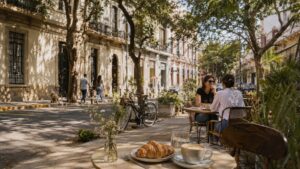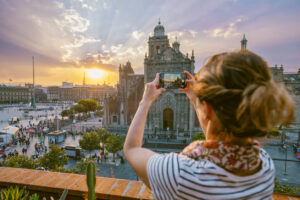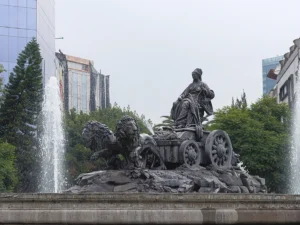

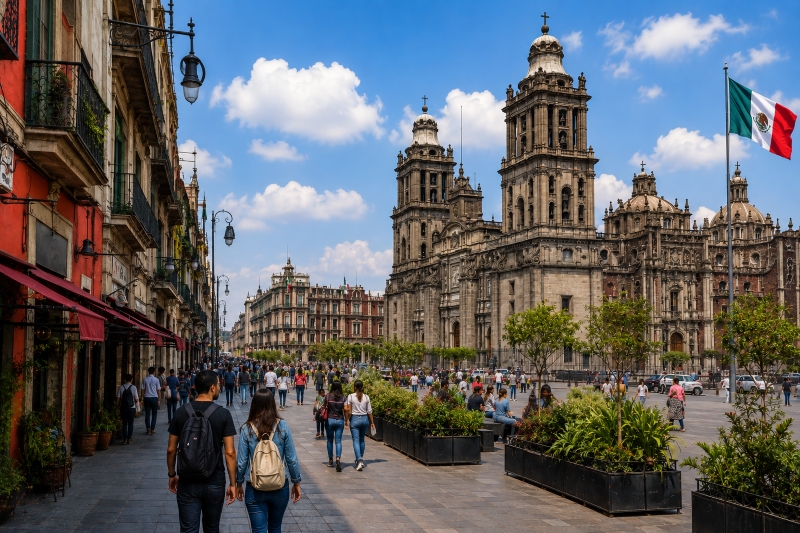
The Historic Center of Mexico City is one of the few places where several versions of the city exist almost on top of one another. Pre-Hispanic remains sit beside colonial buildings, government institutions occupy monumental plazas, murals tell political stories, and traditional restaurants operate only a few streets from busy taco stands and bakeries.
That density makes Centro Histórico ideal for walking, but it also makes it easy to overplan.
Trying to see every church, museum, palace, archaeological site, and famous restaurant in one day usually means spending more time moving between places than understanding them. A better approach is to follow a logical route from the Zócalo toward Alameda Central, choosing a few cultural stops and leaving room for food, architecture, and everyday street life along the way.
The goal is not to complete downtown Mexico City. It is to understand how its history has accumulated over centuries and how the area continues to function as one of the city’s busiest public spaces.
How to Plan a Day in the Historic Center
Start early.
The Historic Center becomes increasingly active as the day progresses, particularly around the Zócalo, Madero, major commercial streets, and popular museums.
A useful route begins around the Zócalo and moves west through the city rather than constantly doubling back.
You might begin with the Cathedral and the archaeological area around Templo Mayor, then continue through pedestrian streets toward Palacio de Bellas Artes and Alameda Central.
Choose one or two museums along the way rather than treating every building as a required stop.
Walking is one of the main advantages of the neighborhood. Many major landmarks are close enough to connect on foot, but comfortable shoes still matter. Between museums, plazas, archaeological sites, and food stops, the total distance can add up quickly.
Keep your evening plans flexible too. Centro Histórico can remain busy after dark, but the atmosphere varies significantly from one street to another. First-time visitors may prefer to complete most sightseeing during the day and move toward another neighborhood for dinner or evening activities.
Zócalo, Cathedral, and National Palace
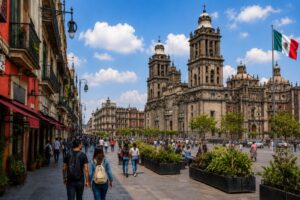
The Zócalo is the natural starting point for understanding downtown Mexico City.
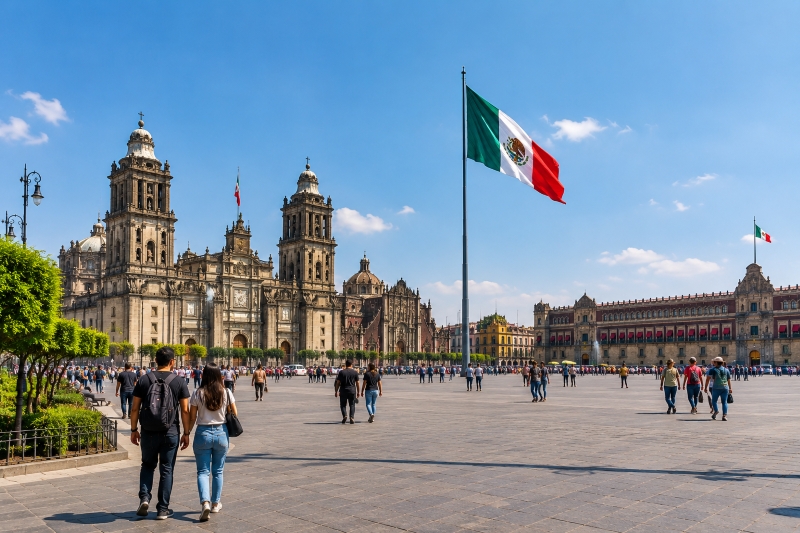
Officially known as Plaza de la Constitución, it functions as both a historic landmark and a contemporary civic space. Public ceremonies, cultural events, political gatherings, temporary installations, and everyday pedestrian life all take place here.
Standing in the square also gives you an immediate sense of the scale of central Mexico City.
Metropolitan Cathedral
On the northern side of the plaza, the Metropolitan Cathedral reflects centuries of construction and changing architectural styles.
Rather than treating it as a quick photo stop, spend some time looking at the details inside and outside. The building is part of a larger historical story because it was constructed in an area that had already been central to the Mexica capital before the Spanish colonial city took shape.
That relationship becomes clearer once you continue toward Templo Mayor.
National Palace
The National Palace occupies another major side of the Zócalo and is closely connected to Mexico’s political history.
For many travelers, Diego Rivera’s murals are one of the most important reasons to include the building in a cultural itinerary. His monumental historical compositions connect Indigenous civilizations, colonialism, independence, social conflict, and modern Mexico through a visual narrative that rewards more than a quick glance.
Access conditions can change because the building remains an active government site, so verify current visitor information before planning the stop.
If you are particularly interested in Rivera, muralism, or Mexican art history, this section of downtown deserves more time than simply photographing the exterior.
Templo Mayor and the City’s Origins
A few steps from the Cathedral, Templo Mayor changes the way the Historic Center makes sense.
Before colonial Mexico City existed, this area formed part of Tenochtitlan, the Mexica capital built around an island environment within the Valley of Mexico.
The archaeological remains provide an important counterpoint to the colonial buildings surrounding them.
Visiting the site helps explain why the Historic Center feels so historically layered. The Spanish city was not developed in an empty space. It was built directly over and around one of the most important cities in Mesoamerica.
The museum connected to the archaeological zone adds context through objects recovered during excavation and explanations of Mexica religion, commerce, warfare, agriculture, and daily life.
If pre-Hispanic history is new to you, this stop deserves at least an hour rather than being treated as something to look at through the fence.
Travelers planning several cultural days in the capital can also explore more of Mexico City’s museum scene, particularly around Chapultepec and Polanco, where archaeological and art collections expand far beyond what fits into a downtown itinerary.
Madero, Bellas Artes, and Alameda
From the Zócalo, begin moving west.
Francisco I. Madero is one of the most direct pedestrian routes toward Palacio de Bellas Artes.
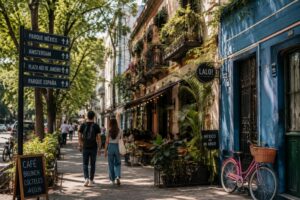
The street can become extremely crowded, particularly later in the day, but that energy is part of the experience. Shops, historic façades, churches, restaurants, and constant pedestrian movement make the walk feel very different from exploring Roma Norte, Condesa, or Polanco.
Do not rush.
Look up at the architecture and allow yourself to turn onto smaller streets if something catches your attention.
Palacio de Bellas Artes
Eventually, the route reaches one of Mexico City’s most recognizable buildings.
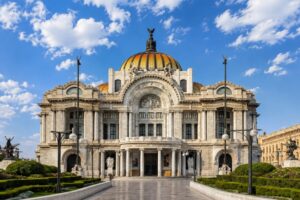
Palacio de Bellas Artes is worth seeing even if you do not plan a long museum visit.
Its exterior combines monumental architecture with one of downtown’s busiest urban settings, while the interior contains murals by major Mexican artists.
Travelers interested in Mexican muralism should consider going inside rather than treating Bellas Artes solely as a landmark.
Alameda Central
Immediately west, Alameda Central provides a welcome change in pace.
After several hours of museums, churches, commercial streets, and crowds, the park creates space to sit down and slow the itinerary.
This is also a useful place to decide whether you want another museum or whether the cultural portion of the day is already complete.
That decision is important. Museum fatigue can make the final stops of an ambitious itinerary much less rewarding.
Museums and Murals Along the Route
One of the strengths of the Historic Center is that cultural institutions appear naturally along a walking route.
You do not need to visit all of them.
Museo Nacional de Arte
MUNAL is one of the strongest choices for travelers interested in Mexican art across multiple historical periods.
The building itself is part of the experience, with a monumental interior that contrasts with smaller contemporary galleries elsewhere in the city.
If visual art is a priority, MUNAL can easily become the major museum of the afternoon.
Museo Mural Diego Rivera
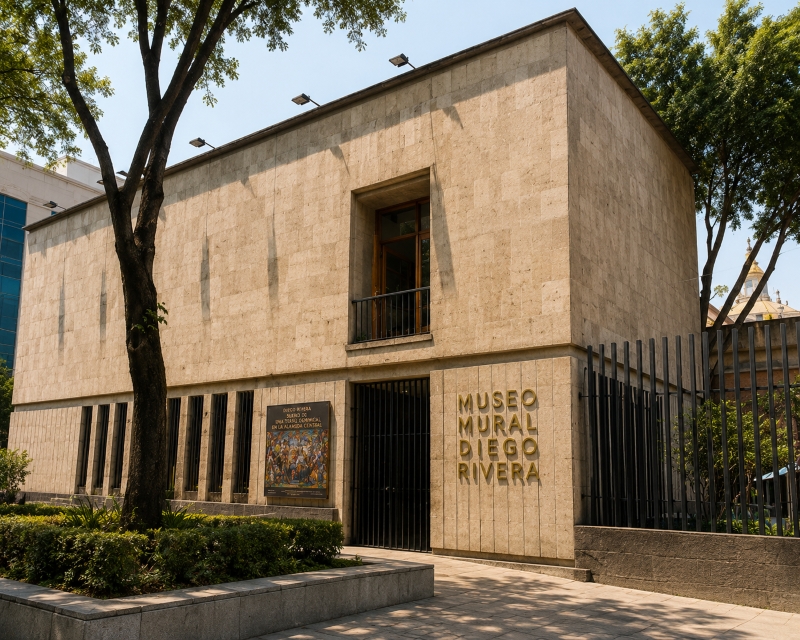
Near Alameda Central, Museo Mural Diego Rivera provides another opportunity to engage with muralism.
Its central work, Dream of a Sunday Afternoon in Alameda Central, brings together figures from different moments of Mexican history within a scene connected directly to the park outside.
Visiting the mural after walking through Alameda creates a useful relationship between artwork and place.
Palacio de Bellas Artes Murals
Travelers with limited time may choose Bellas Artes instead of another museum because its murals allow art and architecture to fit into the same stop.
The key is prioritizing.
If you already spent two hours at Templo Mayor, another two at MUNAL, and substantial time around the Zócalo, adding multiple additional museums may make the day feel like a checklist.
One strong art stop is often enough.
Where to Eat in Centro Histórico
Food should be part of the route rather than something added only after sightseeing.
Downtown Mexico City offers traditional restaurants, bakeries, cantinas, markets, cafés, sweets, tacos, tortas, and street snacks.
Traditional Mexican Restaurants
For a longer lunch, Centro Histórico has established restaurants where the meal can become a break from walking.
Traditional Mexican cooking works particularly well in this part of the city because it connects naturally with the historical focus of the itinerary.
Depending on your plans, a sit-down lunch around midday can also help you avoid trying to visit cultural sites continuously for six or seven hours.
Bakeries and Sweet Stops
Historic bakeries and cafés offer another way to experience downtown without committing to a full meal.
Pan dulce, coffee, chocolate, and other pastries can provide a useful pause between landmarks.
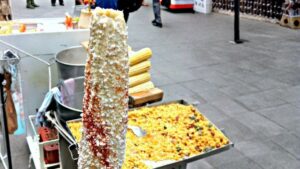
Street Food
Street food is everywhere, but proximity to a famous landmark should not be your only reason for choosing a stand.
Look for steady customer turnover, food being prepared continuously, and an organized cooking area. Taco stands used by office workers and local residents around lunchtime can be especially useful places to observe how everyday downtown eating works.
If you want to explore the city’s broader street food culture, remember that the best experience is often a combination of planned stops and things you notice while walking.
You do not need every meal to come from a famous recommendation.
How to Organize a Realistic Walking Route
A practical first-day route might look like this:
Begin around the Zócalo in the morning.
Visit the Cathedral and then spend time at Templo Mayor.
Continue through nearby streets for coffee or a light snack.
Walk west along Madero toward Bellas Artes.
Stop for lunch before or after reaching the Alameda area.
Choose one major art stop, such as MUNAL, Bellas Artes, or Museo Mural Diego Rivera.
Finish around Alameda Central and decide whether you want to continue exploring or return to your accommodation.
The sequence matters less than avoiding unnecessary backtracking.
If one museum matters significantly more to you, build the route around its opening hours.
And if you enjoy architecture, allow extra time. The Historic Center rewards travelers who notice buildings between attractions rather than focusing only on entrances marked on a map.
Crowds, Sidewalks, and the Evening Atmosphere
Centro Histórico can be intense.
Madero and the streets immediately around the Zócalo may become extremely crowded, particularly on weekends, holidays, and around public events.
Keep bags closed and personal items controlled in dense crowds, just as you would in other major urban centers.
Traffic also deserves attention.
Some streets are pedestrianized, but many nearby roads are busy. Use designated crossings when possible and do not assume vehicles will always yield simply because you are crossing.
Street surfaces vary as well. Historic pavement, crowded sidewalks, vendors, and construction can make comfortable shoes essential.
As evening approaches, the atmosphere becomes more variable.
Some areas remain full of diners, visitors, and commercial activity, while other streets become much quieter after stores close.
If you do not know the area well, use ride-hailing or public transportation for longer evening movements rather than assuming that every walking route that felt comfortable at noon will feel the same late at night.
Should You Stay in the Historic Center?
Staying downtown can make sense for travelers whose trip is heavily focused on historical sightseeing.
You can begin exploring early, reach major landmarks on foot, and experience the center before day-trip crowds become heavier.
However, it is not automatically the best base for every traveler.
If your itinerary includes several days of restaurants, nightlife, parks, cafés, galleries, and neighborhood life in areas such as Roma Norte or Condesa, staying farther west may provide a more balanced experience.
The Historic Center is extremely useful for sightseeing, but a traveler does not need to sleep there in order to experience it properly.
For many first-time visitors, a good strategy is to dedicate one full day to downtown and choose accommodation in a neighborhood that better matches the rest of the trip.
Explore Mexico City From an ULIV Stay
A day in the Historic Center of Mexico City can involve several hours of walking, museums, busy streets, and cultural stops. Returning afterward to a neighborhood with restaurants, cafés, and a different evening rhythm can help balance the experience.
Roma Norte works particularly well as a base for travelers combining downtown sightseeing with food, galleries, nightlife, and neighborhood exploration during the rest of the trip.
ULIV Roma Norte offers fully equipped units in one of the city’s most active central neighborhoods, along with a rooftop, terrace, and outdoor gym. Those spaces can be particularly useful after a full downtown day, giving travelers somewhere to slow down before heading back out for dinner or simply staying in for the evening.
The difference is not limited to the private apartment. ULIV’s professionally managed hospitality model also incorporates guest support, professional cleaning, and consistent operations during the stay, providing more structure than an independent rental where the experience may depend entirely on an individual host.
If your itinerary mixes Centro Histórico with Roma Norte, Condesa, Chapultepec, and other central areas, explore ULIV Roma Norte and compare the location with the places you plan to visit most often. The goal is not to stay beside every attraction, but to choose a base that makes the entire trip easier to organize.
Conclusion
The Historic Center of Mexico City deserves more than a rapid circuit between famous buildings.
Its importance comes from the way different periods of Mexican history coexist within a relatively compact area.
The Zócalo introduces the city’s monumental civic scale. Templo Mayor reveals the foundations of Tenochtitlan beneath the colonial city. The Cathedral and National Palace connect religion, government, art, and political history. Madero leads toward Bellas Artes and Alameda, where architecture, murals, museums, commerce, and public life continue the story.
Food belongs in that experience too.
A traditional lunch, bakery stop, taco, or street snack can provide as much sense of place as another museum entrance.
Instead of asking how many landmarks you can fit into one day, choose the experiences that help you understand downtown best.
Walk slowly, prioritize a few cultural stops, leave time to eat, and pay attention to the streets connecting everything together.
That is where the Historic Center becomes more than a collection of monuments and starts to feel like the living center of a city that has been continuously reinventing itself for centuries.