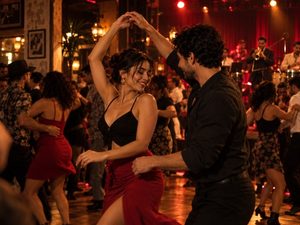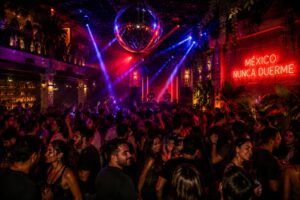

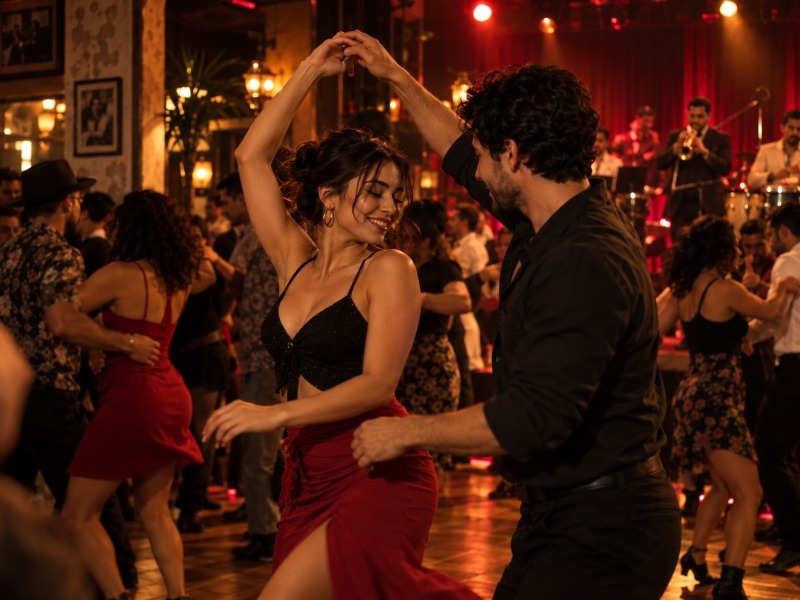
Mexico City has a much broader salsa scene than many first-time visitors expect. Traditional dance halls, Cuban-inspired clubs, social-dance events, live bands, and mixed Latin nights all coexist, often with cumbia, bachata, merengue, or son added to the program.
That variety is exactly why finding the right places to dance salsa in Mexico City depends on more than choosing a famous venue.
A beginner may prefer a night that starts with a class and gradually turns into social dancing. An experienced dancer may care more about floor space, musical quality, and the crowd. Some travelers want a historic ballroom with live music, while others prefer somewhere smaller, later, and more casual.
Schedules also change often. A venue known for salsa may host bachata one night, cumbia another, or a special live band on the weekend. Before going out, always check the venue’s current calendar or social channels rather than assuming an old schedule is still valid.
How Salsa Nights Work in Mexico City
Salsa nights in Mexico City do not follow one standard format.
Some venues are traditional salones de baile, or dance halls, where live bands, large dance floors, and long-established social traditions matter as much as nightlife. Others are bars or clubs that dedicate specific nights to salsa, bachata, cumbia, or tropical music.
A common format might include a class early in the evening, a social-dance period afterward, and live music or DJs later at night.
Mixed rhythms are common as the evening develops.
That means the best time to arrive depends on what you want.
If you are a beginner and want instruction, arriving early makes sense. If you already dance confidently and only care about the social floor, arriving later may be better.
Mexico City’s tropical dance scene also overlaps heavily with cumbia and merengue. Many venues combine salsa and cumbia with bachata, rumba, merengue, or other Latin rhythms rather than dedicating the entire night to one style.
That variety can be an advantage, especially for groups in which not everyone dances the same way.
Traditional Dance Halls
For travelers who want something distinctly local, traditional dance halls are a strong place to start.
These venues are less about bottle service or nightlife production and more about the social experience of dancing.
Salón Los Ángeles
Salón Los Ángeles is one of Mexico City’s best-known historic dance halls.
Its history stretches back decades, and the venue has long been associated with salsa, cumbia, bachata, merengue, danzón, and other social-dance traditions.
Its large floor and classic atmosphere make it very different from a modern nightclub.
This is the kind of place where dancing is the main event.
You may see couples who have been dancing together for years, experienced regulars, and visitors watching the floor before joining in.
For beginners, that can feel intimidating at first, but it is also a useful environment for understanding how social dancing works in Mexico City.
California Dancing Club
California Dancing Club is another classic option.
Its programming has historically included cumbia, salsa, danzón, and live Latin bands, with a strong emphasis on dancing rather than nightlife spectacle.
Regular dancers often come specifically for the floor, which gives the venue a more traditional ballroom character than a conventional nightclub.
It is a better fit if you want a classic social-dance atmosphere than if your priority is cocktails, bottle service, or club-style production.
Salón Caribe
Salón Caribe has also been part of Mexico City’s long-established tropical dance circuit.
Its history is connected with salsa and cumbia performers, and the venue has traditionally operated as a large social-dance space rather than a conventional nightclub.
Classic dance halls can change schedules, reopen, pause programming, or shift event formats, so verify current operating days before making the trip.
Modern Salsa Socials and Clubs
Not every salsa night takes place in a historic ballroom.
Mexico City also has bars, smaller clubs, and social-dance events with a more contemporary atmosphere.
These can be particularly useful for visitors who want dancing as part of a broader night out rather than the entire focus of the evening.
La Bodeguita del Medio
La Bodeguita del Medio in Roma has long been associated with Cuban music, including salsa, rumba, and merengue.
This is a useful option for visitors who want dancing without committing to a formal dance-hall experience.
The atmosphere is generally more social and nightlife-oriented, which can feel more accessible if you are traveling with people who do not all want to dance continuously.
San Luis Club
San Luis Club is another long-running Roma-area option historically associated with salsa and cumbia.
Its retro ballroom atmosphere places it somewhere between a traditional dance hall and a nightlife venue.
That can be appealing if you want history and character while remaining relatively close to central neighborhoods such as Roma Norte and Condesa.
Babalú and Similar Salsa Nights
Some venues organize nights around classes followed by live music or open dancing.
Babalú has historically been associated with salsa classes earlier in the evening, followed by live music, while other nights may focus on bachata or kizomba.
Check the exact schedule before going, but the format works well for beginners: learn first, stay afterward, and practice as the night becomes more social.
This class-plus-social structure is useful because the transition from instruction to dancing happens naturally rather than requiring beginners to walk directly into a crowded floor without preparation.
Where Beginners Can Take a Class
If you have never danced salsa, going directly to a crowded dance floor can feel like too much.
A class-plus-social format is usually easier.
Look for events that explicitly mention:
Beginner salsa class
Open level
Introductory class
Social after class
No partner required
The “no partner required” detail matters for solo travelers. At social-dance events, people generally rotate partners or ask others to dance rather than arriving only as fixed couples.
Arrive early enough to understand the basics before the social starts.
Even a short class can help with timing, basic steps, turns, and etiquette.
You do not need to become technically strong before staying for the social. The goal is simply to feel comfortable enough to join the floor.
For a first night, a venue with mixed skill levels is usually more forgiving than one known mainly for advanced dancers.
A salsa social can also be a better first experience than a large club because the people attending usually expect to dance with different partners rather than remaining within their own groups.
Options for Experienced Dancers
Experienced dancers often care about different things.
The quality of the floor matters.
So does the music.
The crowd matters too.
Traditional halls can be particularly rewarding because regular dancers often have strong social-dance experience and recognizable local styles.
Smaller socials may appeal more if you want focused salsa programming rather than mixed tropical music.
Before choosing a venue, check whether the event leans toward:
Salsa on1 or on2
Cuban salsa
Timba
Mambo
Bachata-heavy programming
Cumbia and tropical mixes
Live band versus DJ
A club can advertise “salsa night” while actually playing a much broader mix.
Experienced dancers should therefore look at the specific event description rather than choosing exclusively by venue name.
For travelers specifically looking for live salsa music, checking the band or performer listed for that evening is particularly important. A venue that regularly hosts tropical music may alternate between salsa, cumbia, son, and other styles depending on the date.
Salsa, Cumbia, Bachata, and Mixed Latin Nights
One of the biggest mistakes visitors make is assuming all Latin dance nights feel the same.
They do not.
Salsa
Salsa nights can vary from Cuban-style dancing to more linear social styles, depending on the crowd and organizer.
Some dancers focus heavily on partner technique, while other venues offer a looser party atmosphere.
Cumbia
Cumbia is extremely common in Mexico City and appears frequently in traditional dance halls.
The rhythm and movement are different from salsa, and many local dancers move comfortably between both during the same evening.
A mixed salsa and cumbia night can therefore feel more representative of a traditional Mexico City dance hall than an event dedicated exclusively to salsa.
Bachata
Bachata events often attract a social-dance crowd and may include dedicated classes before the party.
Some venues alternate salsa and bachata nights rather than mixing both styles evenly throughout the same evening.
If bachata is a priority, check the event calendar instead of assuming a general Latin night will include enough of it.
Merengue and Tropical Mixes
Merengue, son, rumba, and other tropical styles may appear naturally during live-band nights.
If you want one specific rhythm all evening, look for a specialized social.
If variety sounds more fun, choose a traditional dance hall or one of the city’s mixed Latin dance venues.
Music Styles, Etiquette, and What to Wear
You do not need formal dance clothing, but footwear matters.
Avoid shoes that grip the floor too aggressively.
Comfortable shoes with a relatively smooth sole are easier for turns and longer dancing sessions.
For clothing, breathable and flexible is generally more useful than overly formal.
Traditional dance halls tend to allow a broad range of dress, while more nightlife-oriented venues may expect a slightly more polished look.
Social etiquette matters more than fashion.
If you want to dance with someone, ask.
A simple “¿Bailas?” is enough.
If someone declines, move on without taking it personally.
Avoid teaching your partner unless they ask.
Keep the size of your movements appropriate to the floor.
If the venue is crowded, smaller steps are safer and more comfortable for everyone around you.
And if you are new, saying so is perfectly fine.
Most social dancers would rather know you are a beginner than have you pretend otherwise.
Schedules, Cover, and Event Calendars
This is one of the most important practical points: verify everything before going.
Salsa programming in Mexico City can change from week to week.
A venue may have salsa on Thursday, bachata on Friday, and a live cumbia band on Saturday.
Some events require advance tickets.
Others charge a cover at the door.
Traditional halls may have one price for regular nights and a different one for special live-band events.
Modern socials may bundle the class and social into one ticket.
Before leaving, check:
The venue’s current social media
The event calendar
The night’s music style
Whether a class is included
Whether reservations are needed
Whether there is a cover charge
Whether the venue accepts cards
Whether the event starts early or becomes active later
Cash is still useful, particularly at older dance halls, smaller venues, and temporary social events.
Do not rely exclusively on a travel article published months earlier. For nightlife, the current event listing should always have the final word.
Transportation After Dancing
A salsa night can end later than expected.
Plan your return before the evening begins.
If you are staying in Roma Norte, Condesa, Juárez, or another central neighborhood, some venues may be relatively close, but that does not always mean walking home late at night is the best choice.
Ride-hailing services are generally more practical after midnight, especially if you are leaving a venue outside your immediate neighborhood.
Wait for your ride in a busy, well-lit area.
Confirm the vehicle and license plate before entering.
Keep your phone charged.
Avoid standing alone outside a closed venue for an extended period.
If you are drinking, do not drive.
A little transportation planning makes the end of the night much easier.
Stay Close to the Nightlife With ULIV
If dancing is one of the main reasons for your Mexico City trip, staying in a central neighborhood can make nightlife easier to organize.
Roma Norte works particularly well because restaurants, bars, music venues, and several nightlife areas are concentrated nearby, while Condesa, Juárez, and Reforma remain within relatively easy reach.
If your evenings revolve around Roma Norte and the Cibeles area, ULIV Cibeles gives you a base close to restaurants, cafés, bars, and nightlife. The property also includes a terrace, gym, business center, and shared spaces that give our guests somewhere to slow down when they are not out dancing.
Another option is ULIV Mexico City, located on Insurgentes Sur. Its location keeps Roma Norte close while also providing convenient access toward Reforma and other central parts of the city. This can work especially well if your trip mixes nightlife with sightseeing, remote work, or plans across several neighborhoods.
At ULIV, we combine central locations with professionally managed hospitality, giving our guests a consistent place to return to after a late night while still keeping restaurants, nightlife, and everyday city life within practical reach.
If nightlife is a major part of your itinerary, compare ULIV Cibeles and ULIV Mexico City to see which location better matches the neighborhoods and venues you plan to visit.
Conclusion
The best places to dance salsa in Mexico City depend on the kind of night you want.
Traditional dance halls such as Salón Los Ángeles and California Dancing Club offer history, live music, and experienced social dancers.
Smaller clubs and modern socials can be easier for beginners or travelers who want classes before dancing.
Experienced dancers may prefer events with more focused programming, strong social-dance crowds, or live salsa music.
The most important thing is not to assume every salsa night is the same.
Check the rhythm.
Check the schedule.
Check whether there is a class.
Check the cover.
And plan your return before the night gets started.
Mexico City’s salsa scene is broad, social, and constantly changing. Once you understand the difference between traditional halls, modern socials, bachata nights, and mixed Latin dance venues, it becomes much easier to choose the right floor for your experience level and your mood.