
Mexico City has enough museums to fill several trips. The challenge is not finding one to visit. It is deciding which ones deserve space in your itinerary.
For a first visit, trying to move from archaeology to modern art, Frida Kahlo, contemporary exhibitions, and family museums in a single day usually creates more transportation than culture. The most useful way to approach museums in Mexico City is by interest and location.
Travelers interested in pre-Hispanic Mexico should prioritize the National Museum of Anthropology. Modern art fans can build a day around Chapultepec, while contemporary art is easy to explore around Polanco and Granada. Frida Kahlo and Diego Rivera deserve a separate Coyoacán route, and families have interactive alternatives that do not require spending hours reading gallery labels.
The goal is not to visit the largest number of museums. It is to choose a few that help you understand the city and leave enough time to actually enjoy them.
How to Choose a Mexico City Museum
Start with what interests you rather than with a list of the city’s most famous institutions.
If this is your first trip to Mexico and you want historical context, archaeology and national history should come first. If you already know some of that history, modern and contemporary art may offer a more focused way to spend your time.
Location matters almost as much as subject.
Mexico City is large, and museums that appear reasonably close on a map can involve traffic, long walks, or crossing different neighborhoods. Grouping institutions geographically is usually more efficient than choosing three unrelated museums because each appears on a “must-see” list.
Time is another consideration.
A small museum may take less than an hour. The National Museum of Anthropology can easily occupy half a day if you want more than a quick overview. Frida Kahlo’s Casa Azul requires more advance planning because tickets are sold for specific visits and there is no standard walk-up ticket office. The museum is currently closed on Mondays.
For most travelers, one major museum plus one smaller nearby institution makes a better cultural day than attempting three or four large museums.
Essential Museums for First-Time Visitors
If you only have time for a few museums in Mexico City, these provide very different introductions to the capital.
National Museum of Anthropology
The National Museum of Anthropology is the strongest starting point for understanding Mexico before and beyond the colonial period.
Its permanent galleries cover archaeological and ethnographic traditions from across the country, including major spaces dedicated to Mexica, Maya, Oaxaca, Gulf Coast, and other cultures. The museum has 24 exhibition rooms, with 22 permanent galleries, so attempting to examine everything in detail can quickly become exhausting.
For a first visit, choose several areas rather than treating the building as something you must “complete.”
The museum is in the Chapultepec area and currently opens Tuesday through Sunday, from 9 a.m. to 6 p.m., with Monday closure.
Allow at least two or three hours if it is one of your main priorities.
Museo Frida Kahlo
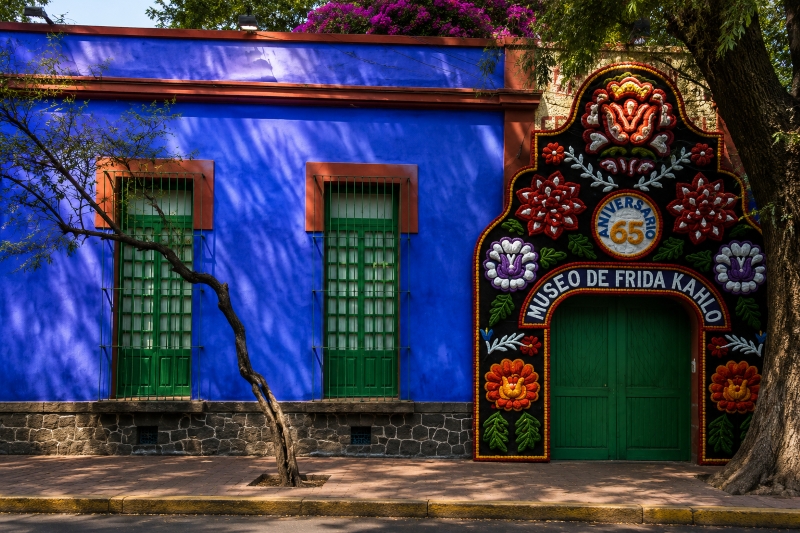
Casa Azul in Coyoacán offers a much more intimate experience.
The museum is located in the house where Frida Kahlo lived for much of her life, and personal objects, rooms, artworks, and the garden help place the artist within a domestic rather than purely gallery setting.
This is one museum where planning ahead matters.
Tickets should be secured through the museum’s official sales channels because the institution states that it does not operate a normal ticket office for admission. It is also closed on Mondays.
Rather than combining Casa Azul with Chapultepec, plan it as part of a Coyoacán day.
Museo de Arte Moderno
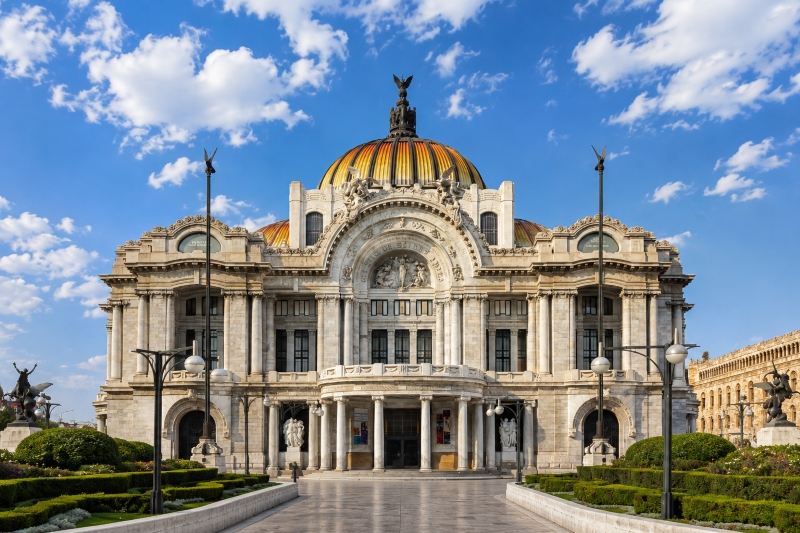
The Museo de Arte Moderno is a logical choice for travelers who want to understand twentieth-century Mexican art beyond the most internationally recognizable names.
Its location inside Chapultepec makes it easy to combine with the Anthropology Museum or nearby cultural institutions, although seeing both in depth on the same day can be ambitious.
This is where geographic planning becomes valuable. You can spend a day in Chapultepec without repeatedly entering traffic between museums.
Pre-Hispanic History and National Culture
Travelers particularly interested in archaeology should give the National Museum of Anthropology more time instead of immediately adding another large museum.
Its scale allows visitors to move from early settlements to major Mesoamerican civilizations and later ethnographic traditions within the same institution.
If you already know that archaeology is one of your main reasons for traveling to Mexico, consider dedicating most of the morning there, taking a proper lunch break, and then visiting a smaller museum in the afternoon.
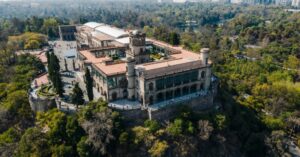
Another possibility is the Museo Nacional de Historia at Chapultepec Castle.
This shifts the timeline forward. Instead of pre-Hispanic archaeology, the castle provides a way to engage with later periods of Mexican history while also experiencing one of Chapultepec’s most distinctive buildings and views.
Trying to visit Anthropology, Chapultepec Castle, and multiple art museums in one day is possible in terms of geography but rarely ideal in terms of attention.
Choose the historical period that interests you most.
Modern and Contemporary Art
Mexico City’s modern and contemporary art scene is easier to navigate when divided between Chapultepec and the Polanco-Granada area.
Museo Tamayo
Museo Tamayo sits inside Chapultepec and focuses on modern and contemporary art.
Its scale makes it easier to pair with another institution than the Anthropology Museum, particularly if you are interested in temporary exhibitions and modern artistic practices.
The museum normally operates Tuesday through Sunday and closes Mondays. Its official visitor information also notes that exhibitions and access can be affected by installation periods, so checking current programming before going is worthwhile.
Museo Jumex
Museo Jumex is one of the city’s main contemporary art institutions and works particularly well for travelers already spending time in Polanco or Granada.
Its program changes with temporary exhibitions and selections from the Jumex Collection, so what you see depends strongly on when you visit.
Admission is currently free, no reservation is required for general admission, and the museum operates Tuesday through Sunday with Monday closure.
Because it sits close to Museo Soumaya, the two institutions are one of the easiest museum combinations in the city.
Museo Soumaya
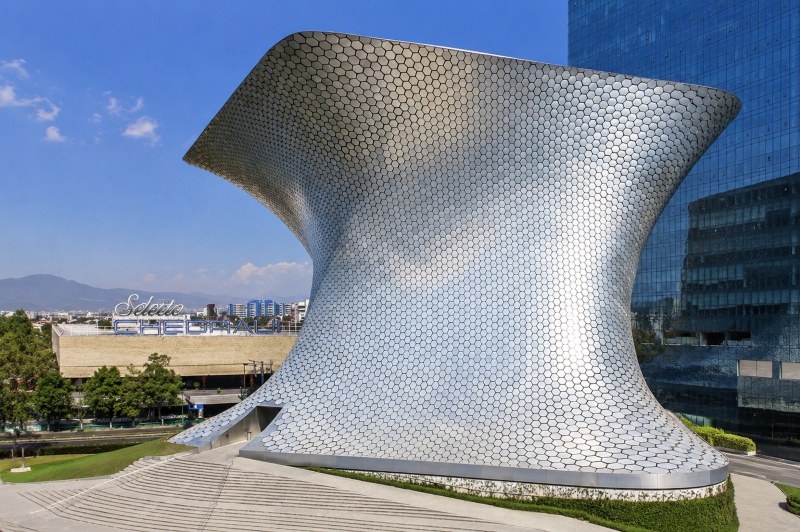
Museo Soumaya is recognizable before you enter because of its distinctive contemporary building in Plaza Carso.
Its broad collection makes it different from Jumex. Instead of focusing mainly on changing contemporary exhibitions, it presents works spanning multiple periods and traditions.
If you are already in the area, seeing Soumaya and Jumex on the same outing is much more realistic than pairing either one with Coyoacán.
Polanco also gives you plenty of options for taking a real break between museums rather than eating hurriedly. Building lunch around one of the area’s restaurant options can make a two-museum day feel much less rushed.
Frida Kahlo and Diego Rivera
Frida Kahlo and Diego Rivera are connected to several museums in Mexico City, but travelers should resist treating them all as one checklist.
Casa Azul is the obvious Frida Kahlo priority for a first visit.
For Diego Rivera, Museo Anahuacalli provides a very different experience. Rivera conceived the museum to house his collection of pre-Hispanic objects, and the building itself is central to the visit.
This makes it a good complement to Casa Azul for travelers particularly interested in the couple’s artistic world and their relationship with Mexican history and identity.
Coyoacán deserves enough time around the museums too.
Instead of arriving for Casa Azul and immediately leaving, spend part of the day walking through the neighborhood, eating, exploring plazas, and experiencing the area around the museum.
There are also Rivera works and murals elsewhere in central Mexico City, so travelers primarily interested in muralism may prefer to build another day around the Historic Center rather than treating Coyoacán as the only Rivera destination.
Family-Friendly and Unexpected Museums
Not every cultural day needs to revolve around fine art or archaeological displays.
Papalote Museo del Niño
Families with younger children can consider Papalote Museo del Niño in the Chapultepec area.
Its interactive approach is a significant change from traditional galleries and can work particularly well when children need to participate rather than simply observe.
For families staying several days in Mexico City, alternating a traditional museum with something interactive can prevent cultural sightseeing from feeling repetitive.
MODO
The Museo del Objeto del Objeto, or MODO, in Roma Norte is another good option when you want something smaller and less conventional.
Its exhibitions explore objects, design, communication, and material culture, making it easier to fit between neighborhood activities than one of the city’s enormous national museums.
It is also useful if you are already spending time in Roma Norte and do not want every cultural activity to require a trip to Chapultepec.
Architecture Can Be Part of the Museum
Some Mexico City museums are worth visiting partly for their buildings.
Museo Tamayo, Casa Azul, Museo Soumaya, Anahuacalli, and the museums housed in historic structures around the city all offer experiences where architecture shapes the visit as much as the collection.
This is worth considering if someone in your group is less interested in traditional museums. Choosing a visually distinctive building can make the outing more appealing without forcing everyone to share exactly the same interest.
Museum Routes by Neighborhood
Grouping museums geographically is one of the simplest ways to make a Mexico City itinerary more realistic.
Chapultepec Route
Start with the National Museum of Anthropology if history is your priority.
Afterward, have lunch or take a substantial break. If you still want another museum, choose either Museo Tamayo or Museo de Arte Moderno rather than trying to see everything nearby.
For most visitors, two museums are enough.
Polanco and Granada Route
Museo Jumex and Museo Soumaya form one of the easiest pairings.
They are close enough that the day does not need to revolve around transportation, and nearby restaurants and cafés make it easy to pause between them.
You can also combine the museum visit with walking around Polanco afterward.
Coyoacán Route
Build the day around Casa Azul.
If Frida Kahlo and Diego Rivera are a major interest, add Anahuacalli, but account for transportation between locations rather than assuming everything in southern Mexico City is within walking distance.
Leave enough time for Coyoacán itself.
Roma Norte Route
Roma Norte works better for smaller cultural stops than for a marathon museum day.
MODO can become part of a broader neighborhood itinerary that includes galleries, bookstores, architecture, cafés, and restaurants.
This approach is particularly useful if you want culture without spending six straight hours inside museum galleries.
Before finalizing any route, it also helps to review a few local tips about mobility and neighborhood distances. A schedule that looks simple geographically can change considerably once traffic and opening hours are involved.
Monday Closures, Tickets, and How Many Museums Fit in One Day
Monday deserves special attention when planning culture in Mexico City.
Many major institutions close that day. The National Museum of Anthropology, Museo Frida Kahlo, Museo Jumex, and Museo Tamayo all list Monday closures in their current visitor information.
Do not assume this rule applies universally, though. Always verify the official website of the specific museum you want to visit, especially around holidays, exhibition changes, or special events.
Ticketing also varies considerably.
Some museums allow walk-up admission, others offer online tickets, and Casa Azul requires more deliberate advance planning. Jumex currently offers free admission without requiring a standard reservation.
As for quantity, two museums in one day is a useful maximum for most travelers.
One large institution plus one smaller museum usually gives you enough variety without cultural fatigue. Three can work if two are compact and located very close together.
Four museums in a day may look efficient on paper, but it often turns the experience into moving between entrances rather than actually engaging with what is inside.
Plan a Cultural Stay With ULIV
Museum-heavy trips work better when your accommodation reduces unnecessary movement.
If Chapultepec, Museo Jumex, Museo Soumaya, and the cultural institutions around Polanco are major parts of your itinerary, staying in Polanco can make it easier to organize museum mornings, return to your accommodation for a break, and go back out for dinner without spending the entire day crossing Mexico City.
ULIV has several properties in Polanco designed for different kinds of stays. For example, ULIV Apartments Polanco combines two-bedroom apartments with practical features for longer trips, along with amenities such as an indoor pool, gym, rooftop with BBQ, and business lounge.
Those amenities matter differently on a cultural trip than they would on a business stay. After several hours walking through galleries and Chapultepec, having a gym, rooftop, common areas, or simply more private living space can give you somewhere to slow down before the next part of the day. ULIV also differentiates itself through professionally managed hospitality, including guest attention and professional cleaning rather than operating only as an independent furnished rental.
Location should still come first. If your museum plans are concentrated around Chapultepec and Polanco, choosing a property there can reduce travel time and make it more realistic to visit one museum deeply instead of rushing through several.
Explore the ULIV Polanco options and compare the location with the museums that matter most to your itinerary. The best base is the one that leaves more of your day available for art, history, food, and the city itself.
Conclusion
The best museums in Mexico City are not necessarily the ones that appear most often on every travel list.
They are the institutions that match your interests and fit naturally into the part of the city you are already exploring.
For a first visit, the National Museum of Anthropology provides essential historical context. Casa Azul offers an intimate connection to Frida Kahlo. Chapultepec brings together modern art and national history, while Jumex and Soumaya make contemporary and broader art collections easy to combine around Polanco.
Families can balance traditional museums with interactive spaces such as Papalote, while travelers interested in design or unusual collections can make room for smaller institutions such as MODO.
Most importantly, plan by neighborhood and leave space between visits.
A museum is more memorable when you have time to look, think, eat, walk, and let the experience settle before entering the next one. In a city with this much culture, there is no need to see everything at once.