
Mexico City has no shortage of Día de Muertos activities. The challenge is deciding which ones actually fit together.
For international visitors, the best way to approach Day of the Dead events in Mexico City 2026 is not to create a long checklist. Reforma, the Zócalo, Chapultepec, Coyoacán, Xochimilco, and Mixquic are spread across very different parts of the city, and trying to visit all of them in one day means spending more time in traffic than experiencing the celebration.
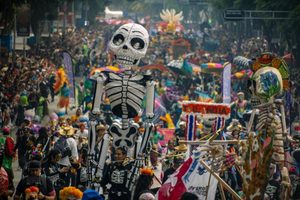
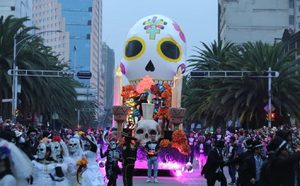
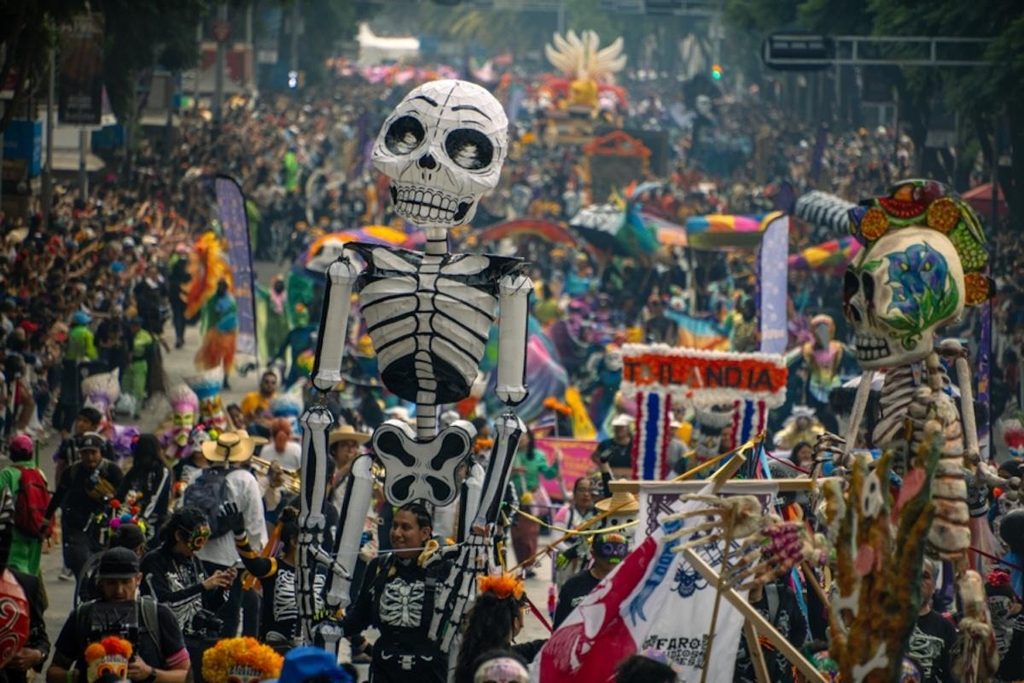
The 2026 official program already includes the Great Day of the Dead Parade on October 31, the Monumental Ofrenda in the Zócalo, seasonal installations on Paseo de la Reforma, a festival in Chapultepec, community ofrendas, Xochimilco experiences, and the traditional commemorations in Mixquic.
A four-day itinerary gives you enough time to experience the large public events, explore neighborhood celebrations, and dedicate proper time to one of the traditions farther south without reducing Día de Muertos to a race between attractions.
Before You Build the Itinerary
The main dates of Día de Muertos are November 1 and 2, but Mexico City’s public program begins much earlier.
In 2026, the Cempasúchil Flower Festival on Reforma runs from October 18 through November 1, while the monumental illumination known as El Camino is scheduled from October 23 through November 8. The Monumental Ofrenda in the Zócalo and community ofrendas begin at the end of October, and the Great Day of the Dead Parade takes place Saturday, October 31.
This creates an important advantage for travelers: you do not need to save every major activity for November 1 and 2.
A good itinerary separates three types of experiences:
Large public celebrations: Reforma, the parade, and the Zócalo.
Neighborhood and cultural activities: Chapultepec, Coyoacán, museums, markets, and local ofrendas.
Community traditions requiring dedicated travel: Xochimilco or Mixquic.
That distinction makes the trip much easier to organize.
Day 1: Reforma and Chapultepec
Start with an area that gives you a broad introduction to the season without immediately entering the heaviest crowds.
Morning and Early Afternoon: Paseo de la Reforma
Paseo de la Reforma becomes one of the main visual corridors of Mexico City Day of the Dead 2026.
From October 18 through November 1, the Cempasúchil Flower Festival occupies the section between the Ángel de la Independencia and the Ahuehuete, bringing together flower growers and producers from areas including Tláhuac, Milpa Alta, and Xochimilco.
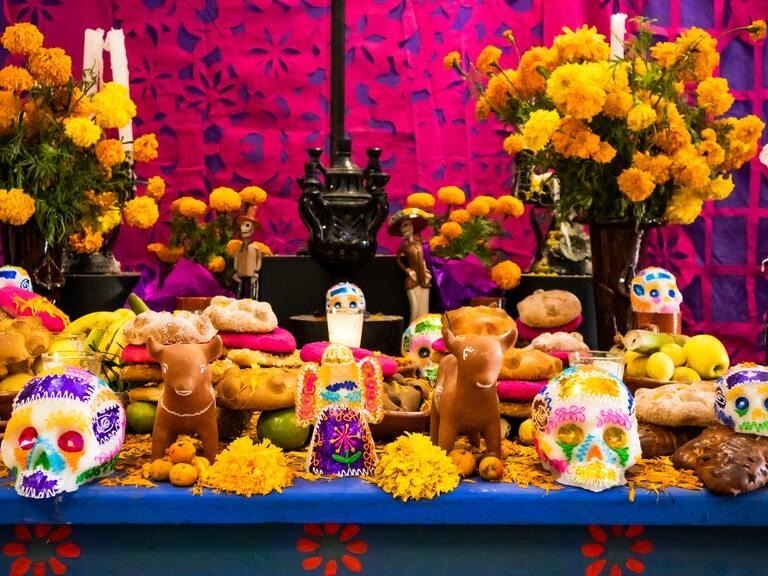
The flowers are more than seasonal decoration. Cempasúchil has a traditional role in Día de Muertos ofrendas and pathways, so the festival also gives international visitors useful cultural context before they encounter larger altars later in the trip.
Continue toward Chapultepec rather than adding another distant neighborhood.
Late Afternoon and Evening: Chapultepec
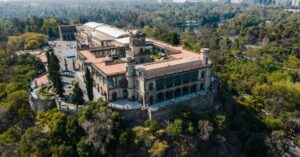
The 2026 Day of the Dead Festival in Chapultepec, titled The Door Between Two Worlds, runs from October 29 through November 4 in the Second Section of Bosque de Chapultepec.
The program combines artistic installations, music, dance, gastronomy, altars, and nighttime programming around Paseo de los Compositores and Lago Mayor.
This pairing works geographically: Reforma and Chapultepec belong in the same general part of the city, so you avoid unnecessary cross-city transportation.
If you arrive early enough to include museums before the festival, our guide to museums in Mexico City can help you choose a cultural stop without trying to cover the entire park.
For dinner, return toward Reforma, Juárez, Roma Norte, or Condesa rather than adding another major event.
Day 2: The Great Parade and the Zócalo
Saturday, October 31 should be built around the biggest public event rather than around several competing plans.
Before the Parade
Keep the morning relatively light.
Have breakfast near your accommodation and move toward Reforma with plenty of time. The Great Day of the Dead Parade is scheduled for 2:00 PM and runs from the Diana Cazadora area along Paseo de la Reforma toward the Zócalo.
Large crowds and street closures are part of the experience, so this is not the day to schedule a rigid sequence of reservations on opposite sides of the city.
Choose your viewing area before arriving.
Staying closer to the western part of the route makes it easier to return toward Roma Norte, Condesa, or Reforma afterward. Following the parade toward the Historic Center can instead transition naturally into the Zócalo.
After the Parade: Centro Histórico
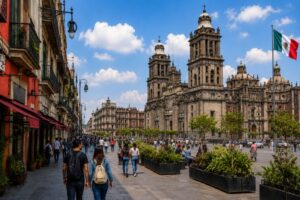
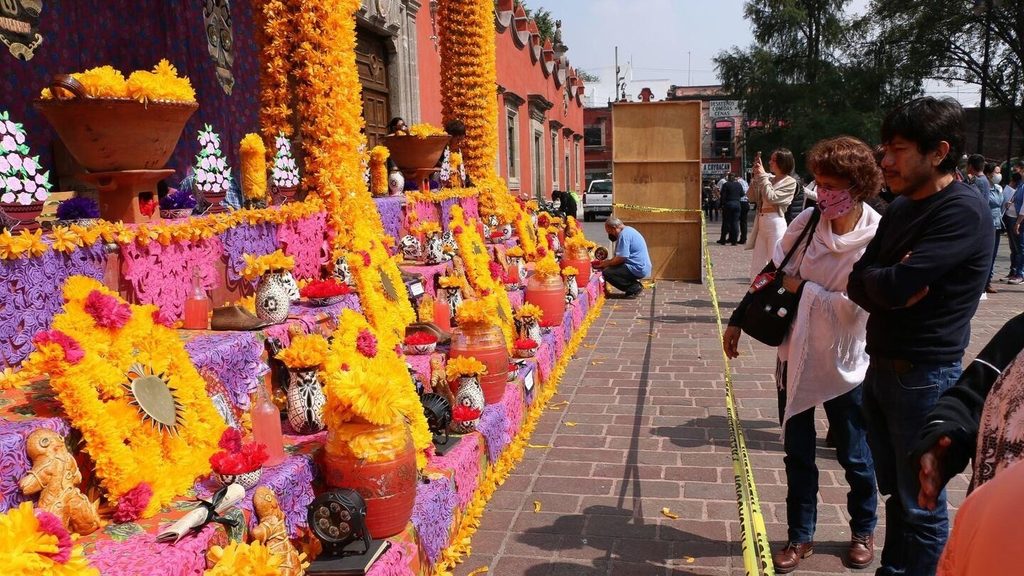
Once you are already moving toward Centro Histórico, this is the right moment to see the Monumental Ofrenda in the Zócalo.
The 2026 installation honors José Guadalupe Posada’s Catrina and includes monumental cartonería, cempasúchil, and other large-scale decorative elements. The surrounding government buildings also receive seasonal illumination from October 29 through November 4.
Expect heavy crowds.
The Zócalo during Día de Muertos is not a quick stop where you arrive, take one photo, and leave in ten minutes. Allow time to move through the square and surrounding streets without feeling pressured by another reservation.
This is also a good evening to stay in the center for dinner or return directly to your accommodation.
Day 3: Coyoacán and a Southern Neighborhood Experience
After two days dominated by monumental public events, shift the scale.
Coyoacán offers a neighborhood environment where plazas, cultural spaces, food, local fairs, and community ofrendas become part of the seasonal atmosphere.
Mexico City’s official 2026 guide specifically identifies Coyoacán and Tlalpan as historic centers where traditional altars and local activities create a more community-focused Día de Muertos experience.
Spend the Day in Coyoacán
Do not approach Coyoacán as another one-hour photo stop.
Walk around the historic center, see the seasonal decorations and ofrendas, visit the market, have lunch, and leave space for whichever official cultural programming is scheduled during your dates.
Compared with Reforma or the Zócalo, the attraction here is not one monumental event.
It is the atmosphere of the neighborhood itself.
This also makes Coyoacán a good place to understand how public Día de Muertos imagery becomes part of everyday city life beyond the main parade route.
Optional Evening: Xochimilco
Travelers who still want another planned experience can use the evening for Xochimilco.
During the season, Xochimilco offers nighttime trajinera experiences and ofrendas around the chinampa landscape. The official city guide includes nighttime boat tours among its Día de Muertos recommendations.
A trajinera is a traditional flat-bottomed boat used on Xochimilco’s canals.
If you choose this option, reserve ahead when required and confirm exactly what the experience includes. Seasonal tours vary, and the route, duration, meeting point, and program should all be checked before booking.
Coyoacán and Xochimilco are more logical together than trying to pair Xochimilco with Reforma or Polanco.
Still, this will be a longer day. Travelers who prefer a slower itinerary can finish after Coyoacán and save the energy for November 2.
Day 4: Mixquic as a Dedicated Experience
If you want to visit Mixquic, give it its own day.
San Andrés Mixquic is located in Tláhuac, far southeast of the central neighborhoods where many international visitors stay. Its Día de Muertos traditions are rooted in community remembrance rather than being organized primarily as a visitor attraction.
The local cycle runs from October 31 through November 2 and culminates with La Alumbrada on the evening of November 2, when candles illuminate the cemetery as families gather around graves.
This is one of the most important places to distinguish between public spectacle and living tradition.
Plan More Time Than the Map Suggests
Traffic becomes a major factor during the celebration.
Official visitor guidance recommends arriving hours in advance rather than planning the trip around an ordinary travel-time estimate.
Leave the central city early and avoid scheduling anything important afterward.
Transportation back can also take longer because many visitors leave the area during similar periods.
Respect the Setting
Mixquic requires different behavior from a parade.
The official guidance asks visitors to request permission before photographing people, avoid sitting or stepping on graves, and remain respectfully quiet during La Alumbrada.
Families are not performers.
Candles, food, flowers, prayers, and time at graves have personal meaning for the people participating.
If your goal is simply to see cempasúchil and Catrinas, the Zócalo and Reforma already provide large public events designed to accommodate visitors.
Choose Mixquic because you want to understand another dimension of Día de Muertos and are comfortable approaching it as a guest.
What If You Only Have Three Days?
You do not need to compress all four days into three.
Prioritize according to the experience you want.
For a first international visit, I would structure the essentials around:
Reforma + Chapultepec
Parade + Zócalo
Coyoacán OR Mixquic
That gives you monumental public celebration, cultural programming, and one more localized experience without spending the entire trip moving between distant neighborhoods.
Xochimilco becomes optional rather than mandatory.
The same applies to smaller seasonal events. More events do not necessarily create a better understanding of Día de Muertos.
Where to Eat Between Events
Food should support the itinerary rather than complicate it.
On the Reforma and Chapultepec day, stay around Reforma, Juárez, Polanco, or Roma Norte for meals.
After the parade, eating in Centro Histórico can make sense if you are already near the Zócalo. If crowds are particularly heavy, returning toward Roma Norte or Condesa may give you more flexibility.
In Coyoacán, eat locally instead of leaving the neighborhood for lunch and returning later.
Mexico City meal times can also be later than some international visitors expect. Lunch commonly extends well into the afternoon, while dinner may start later than in the United States or Canada.
During a high-demand period, reserve specific restaurants in advance when the restaurant is important to your trip.
Do not reserve every meal, though. Event timing and crowds can shift your schedule.
How to Move Between the Main Areas
Día de Muertos requires more transportation planning than an ordinary weekend because major events may bring crowds, temporary road closures, and changing traffic patterns.
Use public transportation when it genuinely simplifies the route and ride-hailing when it makes more sense for the specific journey.
For central plans, Reforma, Juárez, Roma Norte, Condesa, and Centro Histórico are much easier to combine than southern destinations.
Coyoacán requires a more deliberate trip.
Xochimilco requires more time.
Mixquic requires the most dedicated planning.
Our Mexico City travel tips cover transportation and other practical details that can help international travelers understand the city before building individual routes.
Keep your phone charged, save your accommodation address offline, and check current transportation conditions before leaving each event.
What to Wear and Carry
Late October and early November can involve long days outdoors, walking, crowds, and temperature changes between daytime and evening.
Comfortable shoes matter more than creating the perfect Día de Muertos outfit.
Carry only what you need:
- Charged phone
- Portable battery
- Light layer for the evening
- Sun protection for daytime events
- Water when permitted
- Small amount of cash in MXN
- Reservation confirmations when needed
- Offline accommodation address
- Tickets for paid seasonal events
If you want Catrina makeup, save it for a public parade, procession, or appropriate festive context rather than wearing it automatically to a cemetery or community remembrance.
Where to Stay for This Itinerary
A four-day route like this is another reason not to choose accommodation around only one event.
Reforma is particularly practical for the first two days because it connects naturally with Chapultepec, the parade route, Juárez, and central Mexico City.
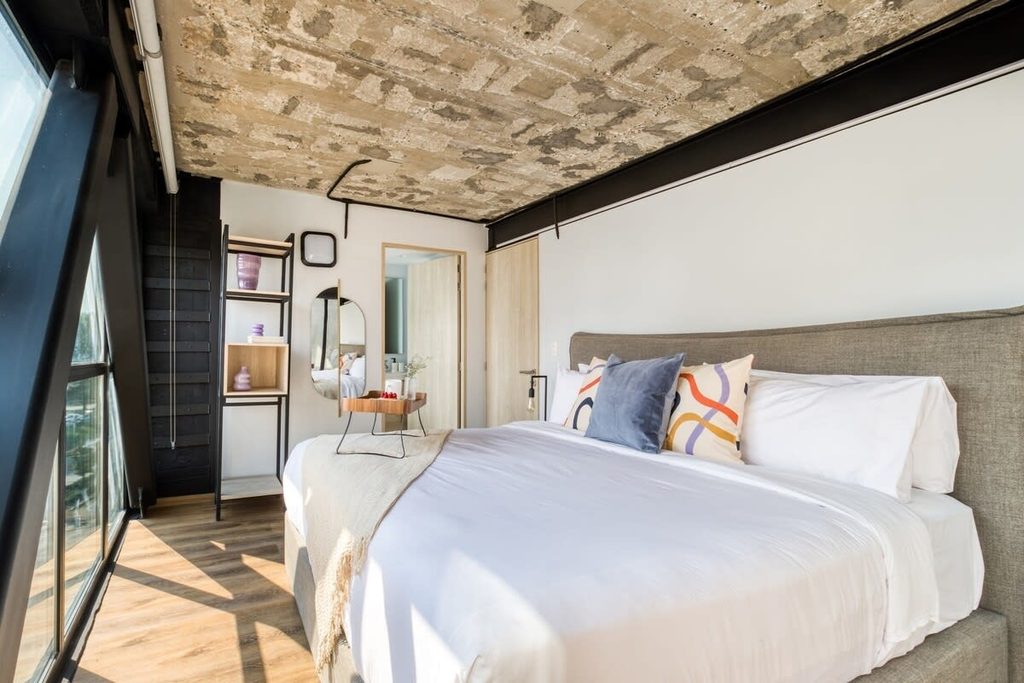
ULIV El Angel gives our guests a base near the Ángel de la Independencia and Paseo de la Reforma, making it especially relevant when the large central events carry the most weight in the itinerary.
For travelers who want restaurants, nightlife, and Roma Norte as part of the trip, ULIV Cibeles offers another central option close to the neighborhood’s everyday activity.
Another alternative is ULIV Mexico City, located on Insurgentes Sur, one of Mexico City’s main avenues. It works well for visitors who want to stay near Roma Norte while keeping convenient connections toward Reforma and other parts of the city.
Travelers who want access to both Roma Norte and Condesa can consider ULIV Pulse Roma – Condesa. This location works particularly well when Día de Muertos shares the trip with neighborhood dining, cafés, parks, and nightlife rather than defining every hour.
For a more premium stay, Collections by ULIV Polanco is a strong option for travelers whose itinerary also includes Chapultepec, museums, upscale dining, shopping, or additional leisure days in Polanco.
For an even more luxury-oriented experience, UTOPIC Campos Elíseos by ULIV offers another base in Polanco for guests who want to combine Día de Muertos events with a more elevated stay close to cultural attractions and premium experiences.
At ULIV, we combine private living spaces with professionally managed hospitality, giving guests a consistent base between long event days, southern excursions, meals, and sightseeing.
The accommodation does not need to be beside Mixquic, Coyoacán, or the Zócalo.
It needs to make the full itinerary manageable.
Conclusion
The strongest Day of the Dead events in Mexico City 2026 itinerary is not the one with the most stops.
Reforma and Chapultepec belong together.
The Great Parade and the Zócalo create a natural central-city day.
Coyoacán deserves time as a neighborhood rather than a quick detour.
Mixquic should stand alone as a dedicated community experience, particularly if you plan to attend La Alumbrada.
That structure leaves enough space to appreciate the differences between Mexico City’s public celebrations, cultural programming, and traditions of remembrance.
Instead of asking how many events you can fit into four days, ask what each day helps you understand about Día de Muertos.