
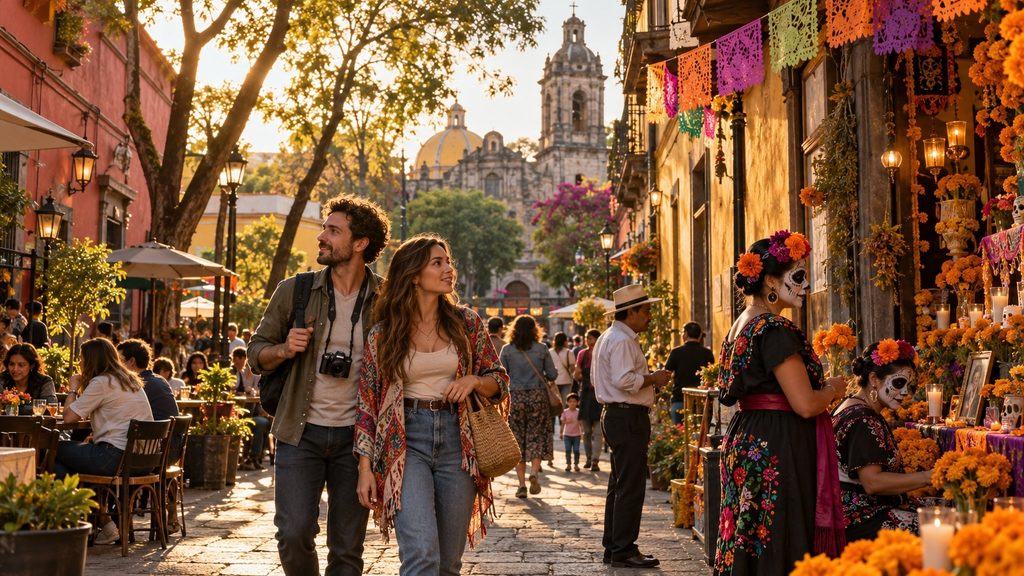
For a first-time international visitor, Day of the Dead in Mexico City can be easy to misunderstand.
The city fills with cempasúchil flowers, monumental altars, Catrina figures, parades, music, candles, public art, and large crowds. But Día de Muertos is not simply a Mexican version of Halloween, and the major parade is not the tradition itself.
At its core, the celebration is about remembrance. Families and communities honor relatives and loved ones who have died, often through ofrendas, food, flowers, photographs, candles, visits to cemeteries, and traditions that vary across Mexico. UNESCO describes the indigenous festivities dedicated to the dead as a period in which families commemorate the temporary return of deceased relatives and loved ones.
For travelers, understanding that distinction makes the public celebrations more meaningful and helps avoid treating deeply personal traditions as entertainment.
This guide explains the dates, symbols, etiquette, local vocabulary, transportation, and practical planning that international visitors should understand before experiencing Mexico City Day of the Dead 2026.
When Is Day of the Dead?
The dates most closely associated with Día de Muertos are November 1 and November 2, but the celebration is broader than two calendar days.
Traditions vary between families, regions, and communities. November 1 has historically been associated with All Saints’ Day and November 2 with All Souls’ Day in the Catholic calendar, while many Mexican communities also distinguish between the remembrance of children and adults in their local practices.
In Mexico City, public programming starts much earlier.
For 2026, the official city calendar includes activities beginning in mid-October, with the Cempasúchil Flower Festival starting October 18, the Mega Procession of the Catrinas on October 25, the Monumental Ofrenda in the Zócalo from October 29 through November 2, and community celebrations continuing into the first days of November.
If Día de Muertos is a major reason for your trip, arriving before November 1 gives you access to more of the public program and reduces the pressure to fit everything into one or two days.
What an Ofrenda Actually Represents
An ofrenda, or altar, is one of the most recognizable elements of Día de Muertos.
It is created to remember specific people rather than simply as seasonal decoration.
Mexico City’s official cultural guide explains that families traditionally prepare ofrendas while sharing memories, prayers, and stories about the people being honored. Common elements carry symbolic or personal meaning.
You may see:
- Photographs of the people being remembered
- Candles or veladoras
- Water
- Food and drinks they enjoyed
- Pan de muerto
- Cempasúchil flowers
- Papel picado
- Copal or incense
- Sugar skulls
- Personal objects or children’s toys
INAH notes that photographs identify the people being honored, candles guide the souls, food and water welcome them after their journey, cempasúchil petals mark a path, and papel picado contributes both color and symbolic meaning.
Public installations may be enormous and artistic. Family altars may be intimate.
Both use visual elements that tourists will recognize, but they do not necessarily serve the same purpose.
When viewing a private or community ofrenda, approach it as a memorial rather than a photo backdrop.
Cempasúchil Is More Than Decoration
The orange flower seen throughout Mexico City during this period is cempasúchil, commonly called Mexican marigold in English.
Its color and scent are closely associated with Día de Muertos, and petals are traditionally used to create paths or guide the dead toward an altar or home. INAH identifies the flower as one of the elements commonly found on ofrendas throughout the country.
During October, travelers will see cempasúchil far beyond family altars.
Flower markets, restaurants, storefronts, public installations, Reforma, plazas, and hotels may all use it as seasonal decoration.
The 2026 program even includes a dedicated Cempasúchil Flower Festival along Paseo de la Reforma from October 18 through November 1.
Knowing the flower’s role helps distinguish between its traditional meaning and its contemporary use throughout the city’s seasonal visual identity.
What Is La Catrina?
La Catrina is the elegant skeletal figure that has become one of the most recognizable symbols associated with Día de Muertos.
The figure is connected with Mexican illustrator José Guadalupe Posada, whose skeletal imagery became part of Mexico’s visual culture. The 2026 Monumental Ofrenda in Mexico City’s Zócalo is specifically dedicated to Posada’s Catrina.
Visitors will see Catrinas represented through makeup, costumes, sculptures, paintings, public installations, and processions.
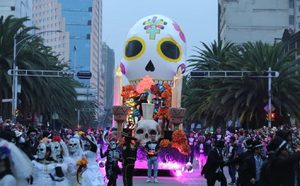
The Mega Procession of the Catrinas is scheduled for October 25, 2026, along Paseo de la Reforma and brings together large numbers of participants in elaborate skeletal makeup and clothing.
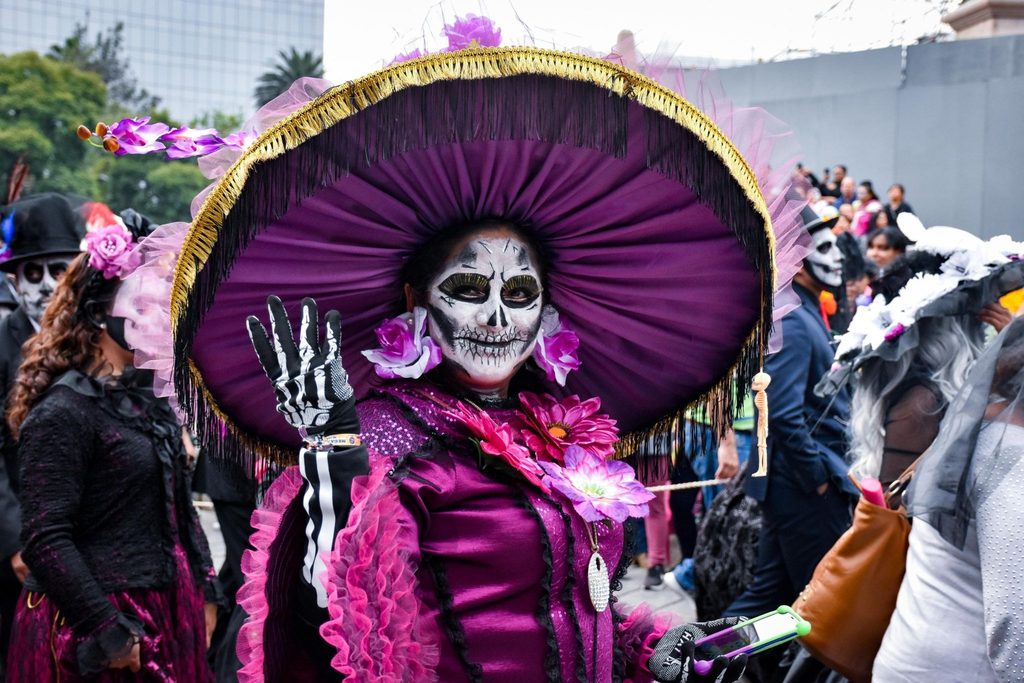
Can tourists wear Catrina makeup?
In a public parade, festival, or organized Catrina event, participating with thoughtful Catrina-inspired makeup is generally very different from turning private remembrance into a costume opportunity.
Context matters.
A public Catrina procession is designed around visual participation. A family cemetery visit or private altar is not.
Avoid treating Día de Muertos imagery as a generic Halloween costume, and remember that skull makeup represents only one highly visible part of a much broader tradition.
The Day of the Dead Parade Is a Public Celebration, Not the Origin of the Tradition
International visitors sometimes encounter Mexico City’s large Day of the Dead parade before learning about the older family and community traditions behind the holiday.
They should not be confused.
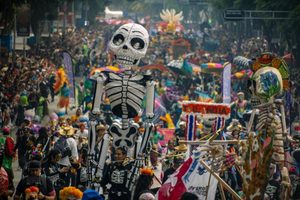
The parade is a large contemporary civic event featuring performers, music, floats, monumental figures, and thousands of spectators.
In 2026, the Great Day of the Dead Parade is scheduled for October 31, traveling from the Diana Cazadora area along Reforma toward the Historic Center.
It is an excellent way for visitors to experience the city’s public celebration.
It is not, however, a substitute for understanding the ofrendas, cemetery traditions, family remembrance, or community practices that give Día de Muertos its deeper meaning.
Think of the parade as one layer of the modern Mexico City experience rather than the definition of Day of the Dead.
Visiting Cemeteries Requires Different Etiquette
A cemetery during Día de Muertos is not simply another festival venue.
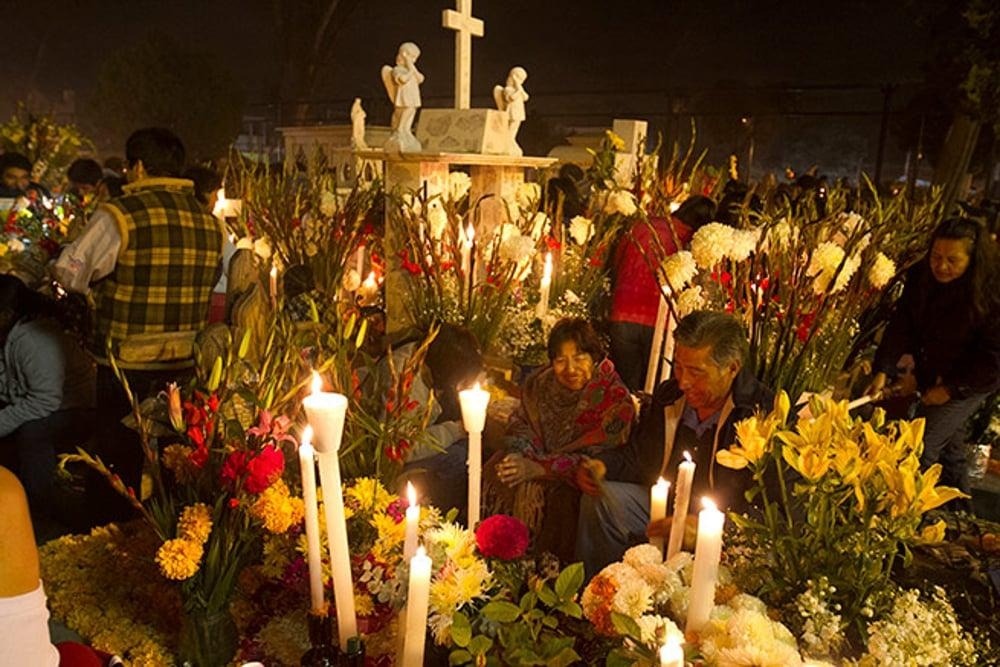
Families may be cleaning graves, praying, sharing food, arranging flowers, sitting together, or spending time remembering relatives.
That means photography and behavior require more care than they would at a public parade.
The official 2026 guidance for Mixquic specifically asks visitors to request permission before photographing people, remain respectfully quiet during La Alumbrada, and avoid sitting or stepping on graves because these are sacred family spaces.
Those principles are useful beyond Mixquic.
If you are unsure whether a photograph is appropriate, ask.
Avoid inserting yourself into a family’s gathering simply to get a better image.
Keep voices and phones under control during moments of prayer or remembrance.
Public cultural participation and private grief can exist in the same place. Visitors should be able to recognize the difference.
Mixquic Is a Living Community, Not a Theme Park
San Andrés Mixquic, in the Tláhuac borough of southeastern Mexico City, is one of the best-known places associated with Día de Muertos.
But its importance comes from community tradition, not from being an attraction created for visitors.
The 2026 cycle runs from October 31 through November 2. Local practices include remembrance of children and adults, offerings of favorite foods and flowers, and the culminating La Alumbrada on November 2, when the cemetery is illuminated by large numbers of candles as families gather around graves.
Mixquic also requires real planning.
It is far from central neighborhoods such as Roma Norte, Condesa, Reforma, and Centro Histórico, and traffic becomes heavy during the celebration. The official visitor information recommends arriving several hours in advance.
Do not treat it as one more stop between the Zócalo and dinner.
If you decide to visit, give the experience its own block of time and approach it as a guest in a community that is practicing a living tradition.
Useful Día de Muertos Terms to Know
A few Spanish terms make the experience easier to understand.
Ofrenda: an altar or offering created to honor the dead.
Cempasúchil: the orange marigold associated with guiding and welcoming the dead.
Veladora: a devotional candle commonly used on altars and graves.
Papel picado: decorative cut paper often used on ofrendas.
Pan de muerto: a seasonal sweet bread associated with Día de Muertos.
Calavera: literally “skull,” but the word appears in several artistic and cultural contexts.
Catrina: the elegantly dressed skeletal figure widely associated with contemporary Día de Muertos imagery.
Alumbrada: an illumination ceremony; in Mixquic, it refers to the candlelit cemetery tradition on November 2.
You do not need to memorize every term before arriving. Understanding the main ones simply makes it easier to recognize what you are seeing.
Plan for Crowds and Longer Travel Times
Día de Muertos is one of the busiest periods on Mexico City’s cultural calendar.
Major activities are spread across Reforma, Centro Histórico, Chapultepec, Coyoacán, Xochimilco, Tláhuac, and other parts of the city.
Trying to visit several distant areas in one day can turn a cultural itinerary into a transportation itinerary.
A better approach is to group plans geographically.
Reforma and Juárez can be combined easily.
The Zócalo and Centro Histórico deserve their own central block.
Chapultepec works well as a half-day or evening depending on the official program.
Coyoacán deserves more time than a quick photo stop.
Mixquic should be treated as a separate excursion.
If you are still learning how the city fits together, our Mexico City travel tips can help with transportation and practical planning.
What Should You Reserve Ahead?
Not every Día de Muertos activity requires a ticket.
Public ofrendas, installations, and many street events are free.
Other experiences may require reservations or advance tickets, especially nighttime programs, special museum events, guided tours, restaurant reservations, and seasonal experiences in places such as Xochimilco.
For 2026, check official schedules before booking around a specific event because times, access conditions, and capacity can change.
Accommodation deserves early attention too.
The combination of Día de Muertos activities and other major events at the end of October can increase demand in central neighborhoods.
If you have specific requirements such as multiple bedrooms, parking, workspace, or a particular location, booking earlier gives you more choice.
How Long Should International Visitors Stay?
If Día de Muertos is the main reason for the trip, four or five nights gives you much more flexibility than trying to experience everything over November 1 and 2.
A longer stay lets you separate public celebrations from cultural sightseeing.
You might dedicate one day to Reforma and central events, another to Centro Histórico, and another to Coyoacán or a southern experience.
You can also use the additional time to explore museums, Chapultepec, restaurants, and neighborhoods outside the festival program.
Our guide to museums in Mexico City can help fill the days before or after the main celebrations without forcing more Día de Muertos activities into an already crowded itinerary.
Choose Accommodation for the Entire Experience
Where you stay affects how much of the trip is spent moving between events.
For visitors prioritizing Reforma, central public activities, and easy access to Chapultepec, ULIV El Angel gives our guests a base near the Ángel de la Independencia and the Reforma corridor.
For travelers who want Día de Muertos activities to share the trip with restaurants, cafés, and Roma Norte nightlife, ULIV Cibeles provides another central option.
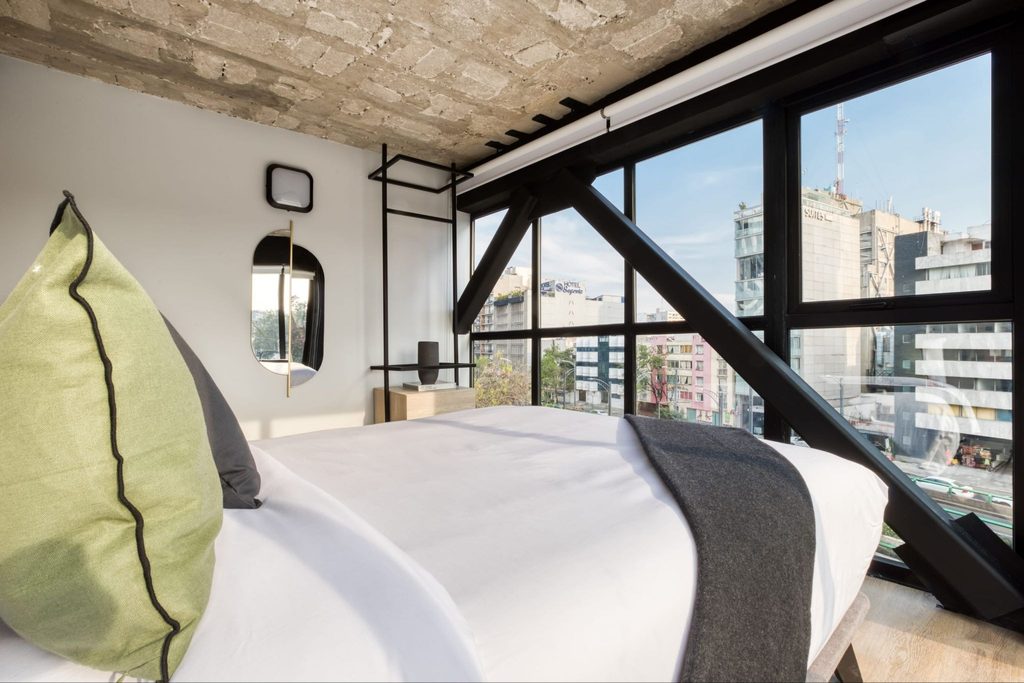
Another alternative in Roma Norte is ULIV Mexico City, located on Insurgentes Sur, one of Mexico City’s main avenues. It works well for travelers who want to stay close to Roma while maintaining convenient connections toward Reforma and other parts of the city.
If your plans move frequently between Roma and Condesa, ULIV Pulse Roma – Condesa offers a convenient base between both neighborhoods, with restaurants, cafés, parks, and nightlife nearby.
Travelers looking for a more premium stay can consider Collections by ULIV Polanco, particularly if their Día de Muertos itinerary also includes Chapultepec, museums, shopping, upscale dining, or additional days exploring Polanco.
For an even more luxury-oriented experience, UTOPIC Campos Elíseos by ULIV is another option in Polanco for guests who want to combine the cultural activities of Día de Muertos with a more elevated stay in one of Mexico City’s most exclusive areas.
At ULIV, we combine private accommodation with professionally managed hospitality, giving guests a place to return to between long days of public events, neighborhood exploration, and cultural activities.
The right base depends on what you want outside the celebrations as much as what you want to attend during them: Reforma for major public events, Roma Norte and Condesa for restaurants and neighborhood life, or Polanco for a more premium experience close to Chapultepec and cultural attractions.
Conclusion
Experiencing Day of the Dead in Mexico City is more meaningful when you understand what you are participating in.
The Zócalo’s monumental installations, Reforma’s processions, Catrina makeup, cempasúchil, and public celebrations are highly visible parts of the season.
Behind them is a tradition centered on memory, family, and relationships with the dead.
Visit public events enthusiastically.
Photograph monumental installations.
Learn the meaning of an ofrenda.
Enjoy the flowers, food, art, and neighborhood celebrations.
But when you enter a cemetery, encounter a family altar, or visit a community such as Mixquic, adjust the way you participate.
That distinction is what allows an international visitor to experience Día de Muertos as more than a visual spectacle.